With so many businesses and news outlets offering advice on how to use data, the BI corner of the web is teeming with industry jargon: metrics, KPIs, analytics, to name a few.
Many businesses often ask: what is the difference between KPIs and metrics, and how should they be used? While the terms are closely related, understanding KPIs vs metrics is essential for measuring performance and making better business decisions.
Understanding this difference helps organizations choose the right KPIs and metrics to track performance effectively.
Unfortunately, it’s not uncommon to see some of these terms used interchangeably. The problem is, they aren’t the same—and using them correctly makes a difference.
Understanding the Relationship Between KPIs and Metrics
The way we use words changes the way we think about and understand them. So using them interchangeably not only creates confusion, it can actually be bad for business.
To get real power out of your data, it’s important to understand the relationship between KPIs and metrics, and how to use them. That’s why we’re setting the record straight, once and for all.
Understanding the difference between KPIs and metrics helps businesses focus on what truly drives performance. While metrics track various activities, KPIs highlight the most important indicators tied to business goals.
What is a KPI
A KPI is a type of metric that is directly tied to business goals and outcomes. Understanding the difference between KPIs and metrics helps businesses focus on the data that truly measures performance and success.
Metrics vs KPIs
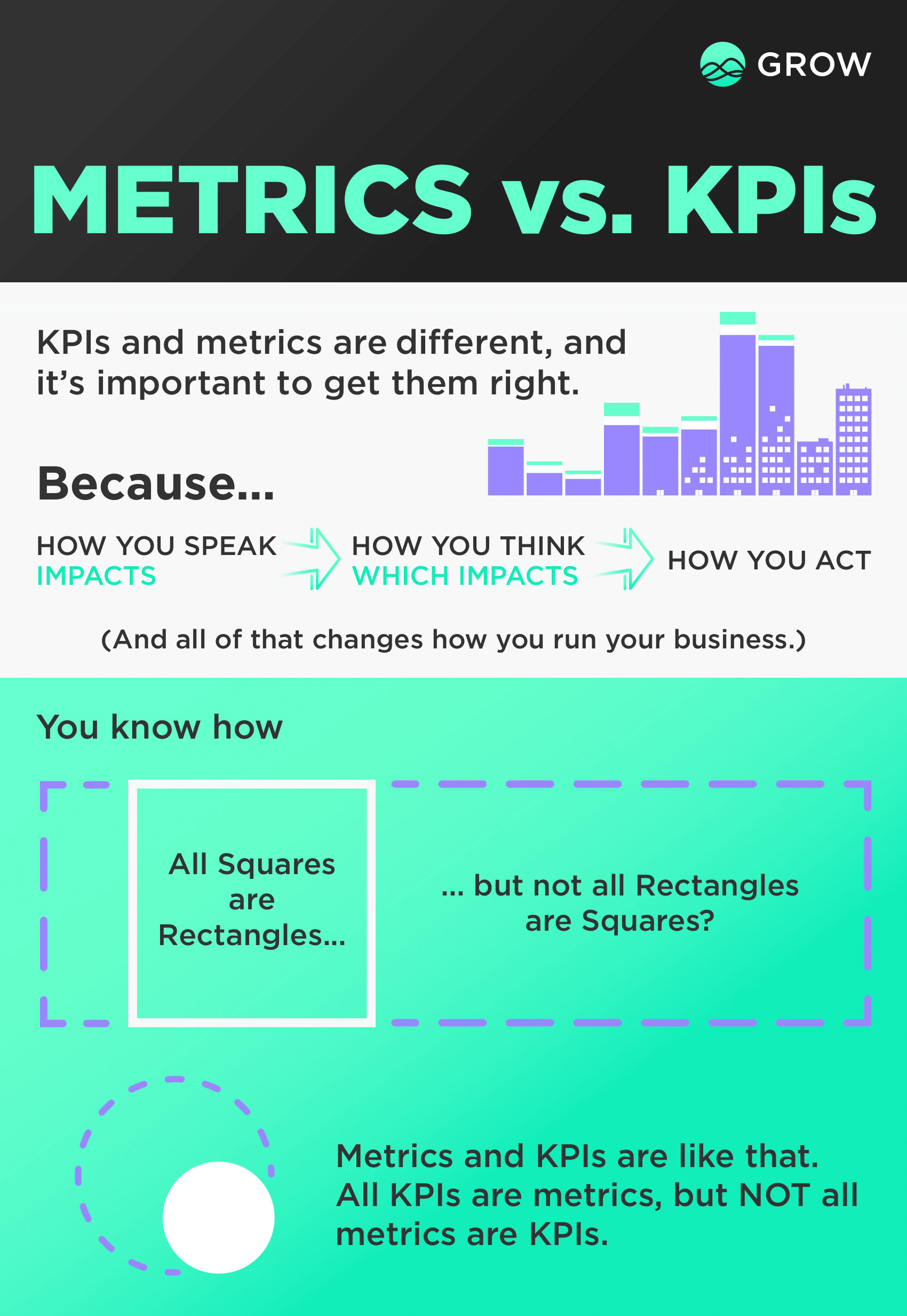
Although all KPIs are metrics, not all metrics are equally important. Metrics track different aspects of business performance, but KPIs are the specific metrics that are directly tied to key business goals and outcomes. This is the core difference between KPIs and metrics — KPIs to help measure success, while metrics provide supporting data.
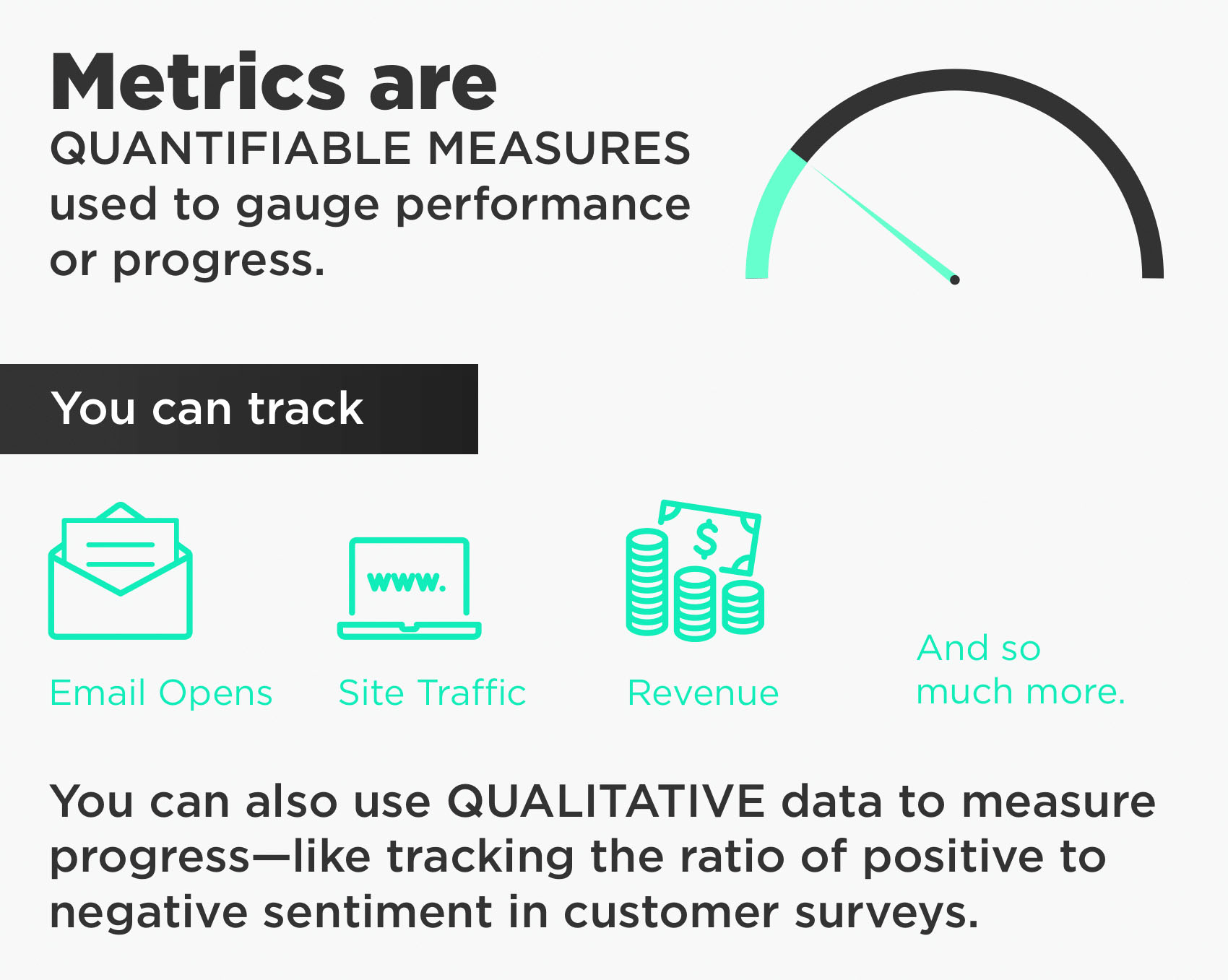
Data sources can also be qualitative, such as when you’re an early stage startup trying to find product-market fit. In that situation, your data source may be customer interviews where you track responses about what they like or dislike about your product. Then, your metric could be the ratio of positive vs. negative sentiment, or a list of necessary improvements, because these help you understand your progress toward product-market fit.

Key Performance Indicators (KPIs)
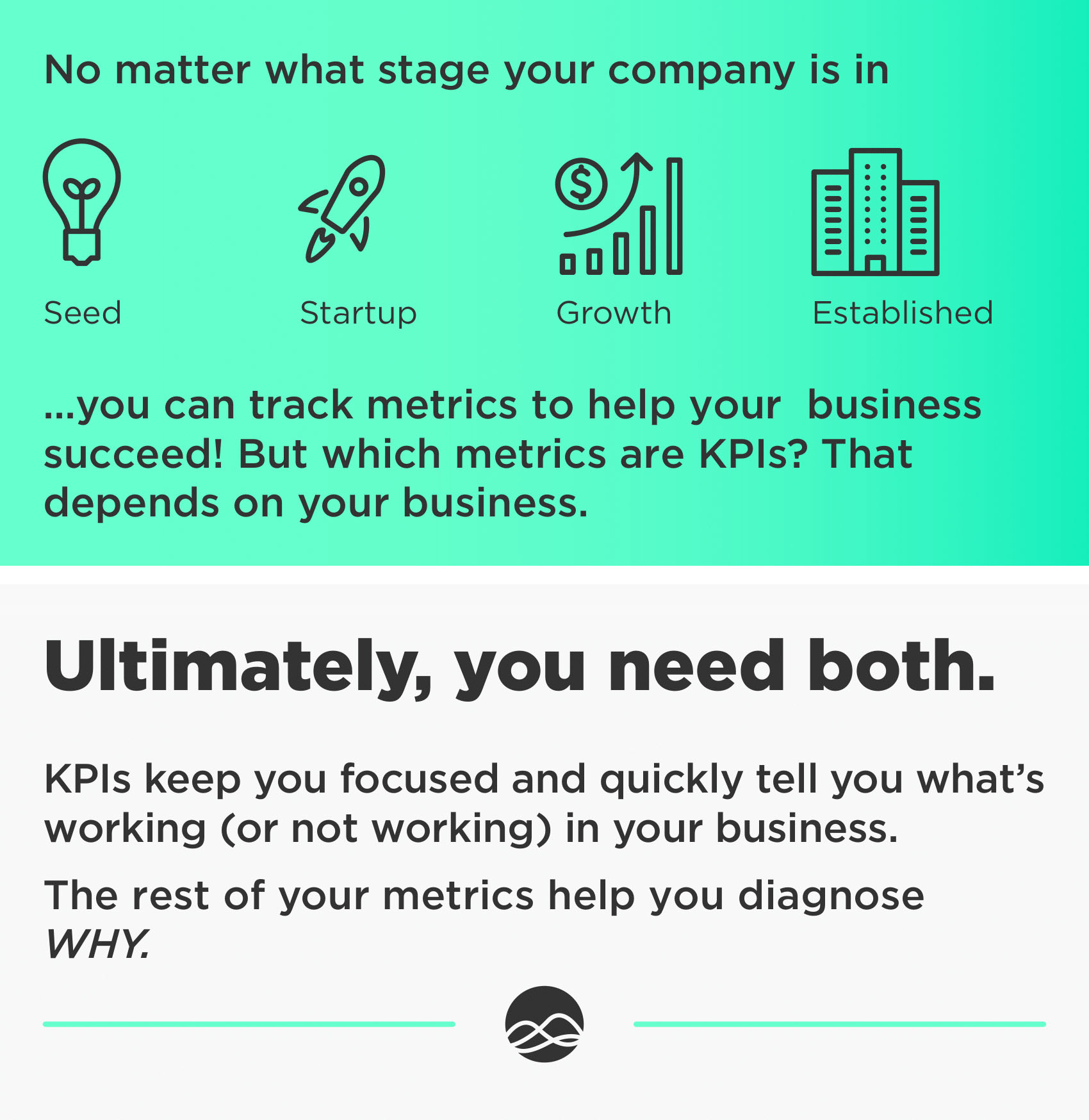
So what metrics should be KPIs? The difference really depends on your business. Here’s why:
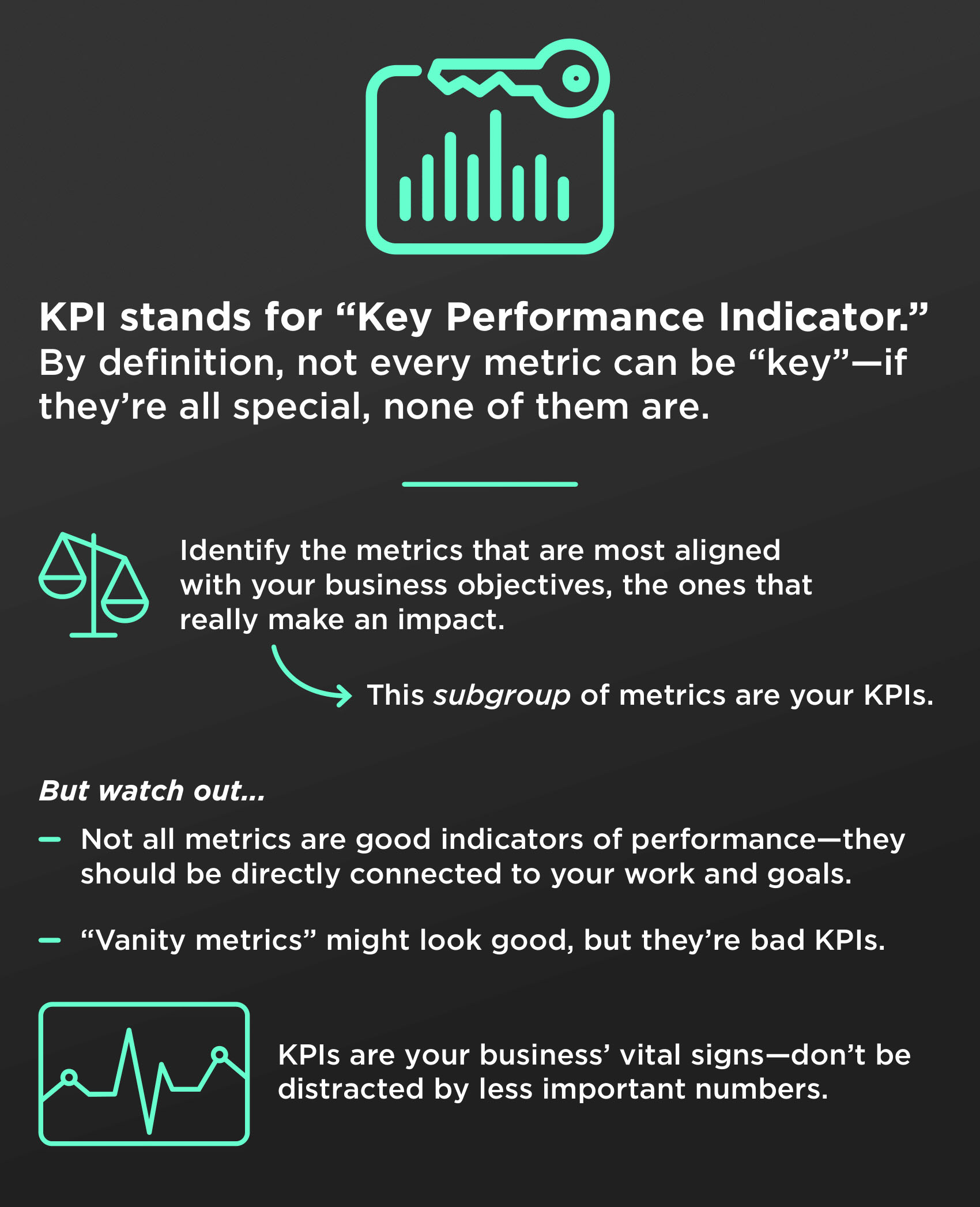
As we’ve said, KPI stands for “key performance indicator.” By definition, not every metric you measure can be “key”—if they’re all special, none of them are. So it’s up to you to select metrics that are most closely aligned with your critical business objectives. This subgroup of metrics become your KPIs.
One easy way to think of KPIs is like vital signs—if your business’ pulse is flatlining, you shouldn’t be fretting over zits.
KPIs center your focus on the things that matter most to keep your business alive and well. (For more on how KPIs can help you stay focused on the right data, check out this post.) Ultimately, it’s up to you to define which metrics are true vital signs for your business.
This also brings up another point: Not everything that your business measures will be an accurate measure of performance. These are known as Vanity metrics.
For example, while you certainly want to measure social media marketing metrics like your number of Facebook followers and see it improve, that metric won’t tell you how well you’re managing your business, or even anything about your revenue or customers. (Heck, unless your marketing team just ran an email campaign with the specific goal of getting more followers on Facebook, it likely won’t tell anyone much about anything.)
Vanity metrics are easy to get hyped about, but provide very little insight into your business. In short, they’re a big “no-no” when it comes to selecting KPIs.
Managing KPIs and Metrics with Dashboards
We recommend using a data dashboard to manage your metrics and KPIs. Dragging data from 18+ apps into an Excel spreadsheet isn’t just a colossal waste of time; it creates reports that are hard to read, hard to understand … and pretty ugly (if we’re being brutally honest). Plus, you have to deal with the headache of creating them on a regular basis.
On the other hand, business intelligence dashboards bring your metrics to life with beautiful visualization (much better than endless spreadsheet cells). They also allow you to create specific KPI-only dashboards to stay focused. A dashboard is not only easier to use, but it’s an extremely effective way to track key objectives, drive your business decisions, and accelerate growth.

Browse Categories
Recent Articles

Big Achievement For Grow: Empowering Business with Award Winning Business Intelligence Tool
View Article


How I Use Grow as a Product Manager to Measure Value, Quality, Execution—and Discover Opportunities
View Article


